Energy Gains in Adam's patent.

  • 11K Views
  • Last Post 6 hours ago
Jagau posted this 07 September 2024

Is there energy Gains in Adam’s patent, the great question.


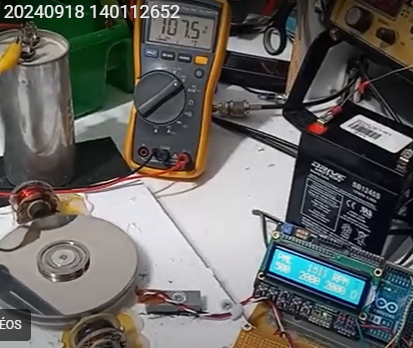
I built an Adams motor using a computer HDD to simplify the assembly of the bearings and with the installation of six permanent neodymium magnets on the rotor. This is Robert Adams’ first advice in order to understand the operation and then build a bigger one.

In order to study the behavior of the motor I use two 5 milli-henry coils on each side at 180 degrees from each other with the left side winding CCW and the right CW, the coils are connected in series.

The control system will be done with an Arduino mega 2560 using a hall effect sensor S277 for detecting the position of the rotor relative to the magnets. On the hall sensor S277 that I recovered from a computer fan, only the DO output (pin 2) will be used to give the interrupt detection instruction (it is in the Arduino program) in order to activate a 6N136  optocoupler to give a pulse on the Gate of the Nmos IRF3205 which will activate the two coils in series of the motor as declared by the inventor Mr. Robert Adams.


Photo to come

Jagau

Unimmortal posted this 09 July 2025

A further update with regards to the field that forms once rpm's are high enough.

With the aid of an external motor, I've been able spin my rotor to ~2500. At this speed, I can then short primaries into an infinity loop and short the secondaries into a parallel loop. This results in a big speed-up AND a 20% input current drop. Before shorting each set of coils were up over 500VAC.

There is resonance we can definitely induce in counterwound coils.

Jagau posted this 09 July 2025

Hy unimmortal

here is resonance we can definitely induce in counterwound coils.

In one of my threads here in page 10 :

https://www.beyondunity.org/thread/non-linear-resonance/?p=10

When you pulse two coils CCW and CW, you get over 500 VDC at the output of a third coil on a single wire. It becomes an open system and does not affect the DC input

What you said is true.


Jagau

Jagau posted this 4 weeks ago

In the Adams motor/generator, there is a way to recover almost all the energy. 

Nearly 95% efficiency has been achieved. "I'm talking about that 107 volts on the DDM

This has been achieved with a judicious placement of the fast diodes.

Thus, almost all the energy returned from the coils is used in a second stage. which considerably reduces the input.

Jagau

Jagau posted this 4 weeks ago

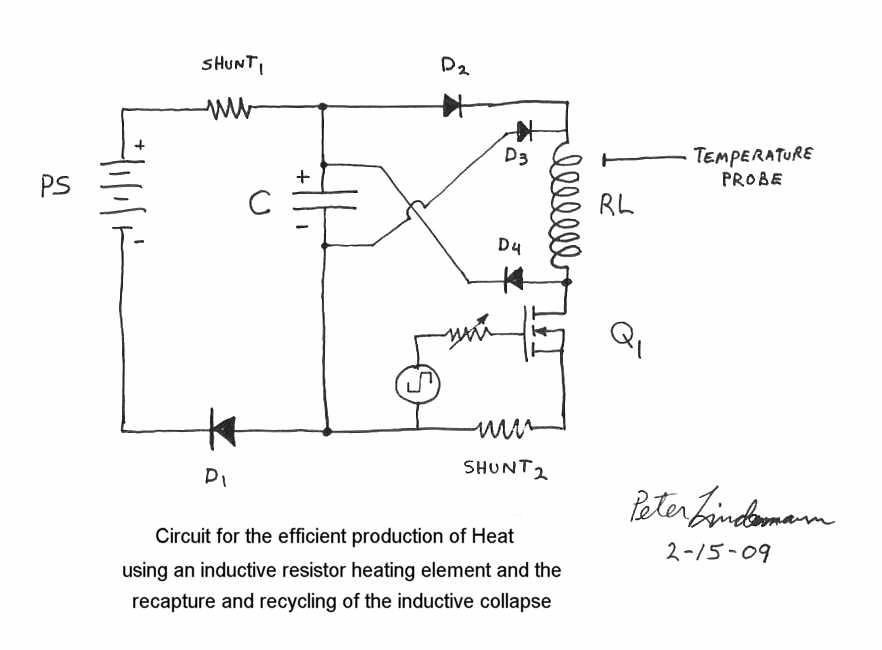
The circuit built by Doc. Peter Lindeman, see page 70 and following pdf for explanation


and conversion for the Adams motor for Stator L1 and L2 of 5 mh

Thus all the energy is recovered and reused twice.

Jagau

Attached Files

Jagau posted this 4 weeks ago

Hi

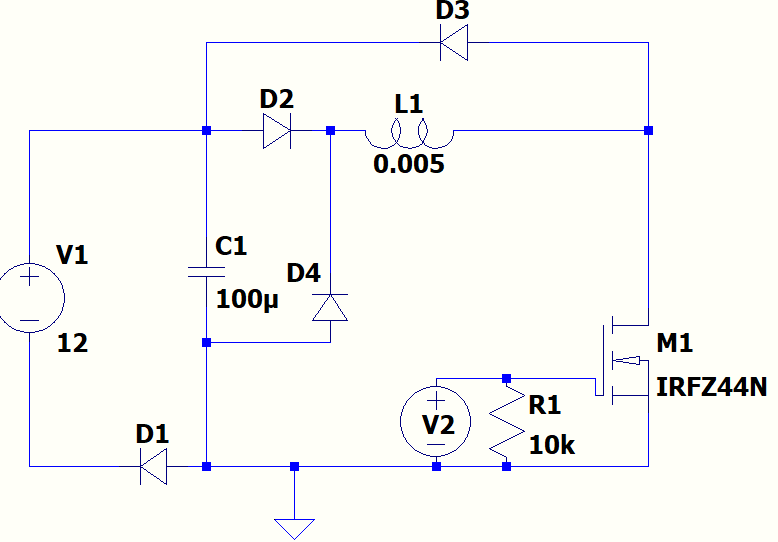
And even though LTspice is confused, it gives surprising results on the currents provided.

The capacitor C1 charges first to the same level as the PS at ON time, then a second time with the BEMF at OFF time of NMOS by D3-D4, all while passing through the coil twice.

D1 does all the work so that only C1 is reused, and not the source. Thus, C1 never drops below 12VDC.

Very interesting circuit.

Jagau

andy2 posted this 4 weeks ago

Maybe L1 can be primary of transformer which L2 can deliver power through half bridge (only one diode) to output cap? Or this will completely destroy inductive collapse of L1?

Jagau posted this 4 weeks ago

Andy, that would be a great experience to have.

jagau

Jagau posted this 3 weeks ago

Several sites have attempted to replicate the Adams engine; another one succeeded, but no one talks about it. It seems that when things get a little more complicated, most give up. There's a glaring lack of effort on most research sites.

On this site, the person offers a more convincing version, and all we know is that we haven't seen any replication anywhere.

https://www.homemade-circuits.com/making-a-self-powered-generator/


In the construction demonstrated above, the current moving from the drive battery into the circuit is actually 70 milliamps, which at 12.7 volts produces an input power of 0.89 watts. The output power is approximately near 40 watts, confirming a COP of 45

I am trying to focus on replicating the Adams engine by searching for the best test combination, but there is very little or no discussion on the subject; it is difficult to do research under such conditions.

Jagau

Jagau posted this 6 days ago

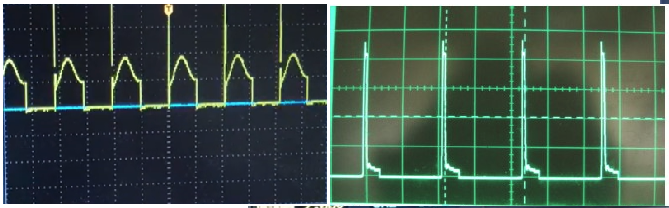
It is interesting to see how Nagy, In trying to reproduce the MEG of Bearden, had an H-shaped waveform close to that of John Bedini and Adams.

On the left is Nagy's and on the right is Bedini's

It is in this peak of tension, when it is recovered, that it comes from the surrounding etheric environment magic come.

Jagau

Close