Energy Gains in Adam's patent.

  • 11K Views
  • Last Post 6 hours ago
Jagau posted this 07 September 2024

Is there energy Gains in Adam’s patent, the great question.


I built an Adams motor using a computer HDD to simplify the assembly of the bearings and with the installation of six permanent neodymium magnets on the rotor. This is Robert Adams’ first advice in order to understand the operation and then build a bigger one.

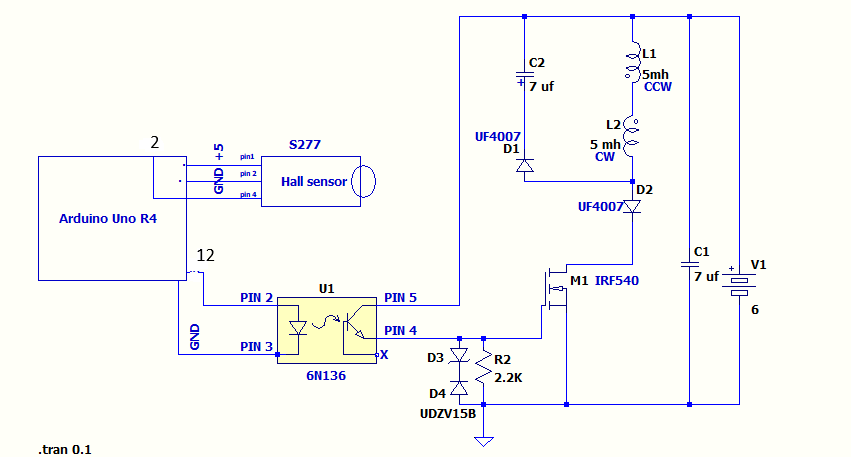
In order to study the behavior of the motor I use two 5 milli-henry coils on each side at 180 degrees from each other with the left side winding CCW and the right CW, the coils are connected in series.

The control system will be done with an Arduino mega 2560 using a hall effect sensor S277 for detecting the position of the rotor relative to the magnets. On the hall sensor S277 that I recovered from a computer fan, only the DO output (pin 2) will be used to give the interrupt detection instruction (it is in the Arduino program) in order to activate a 6N136  optocoupler to give a pulse on the Gate of the Nmos IRF3205 which will activate the two coils in series of the motor as declared by the inventor Mr. Robert Adams.


Photo to come

Jagau

Jagau posted this 4 days ago

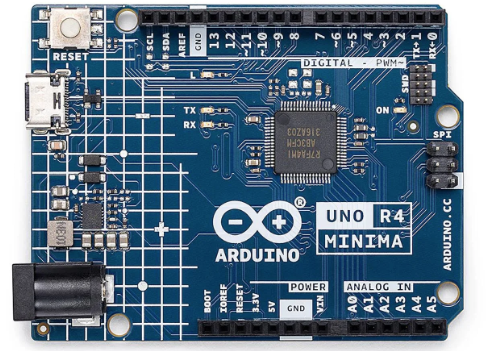
I rebuilt the Adams motor with the new configuration using the faster and more compact Arduino R4 minima.

The 6N136 optocoupler is very fast, I recommend it.

I will add Peter Lindeman's brilliant idea, see above, in another post and I will test its effectiveness.

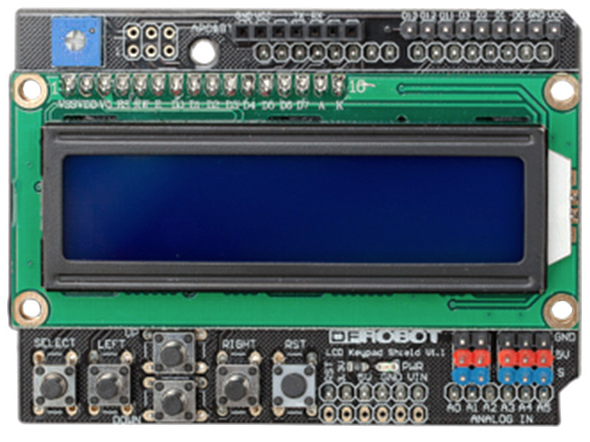
I rewrote the .ino code to also see what happens with the DFRobot 6 keypad LCD display which integrates wonderfully well on the Uno R4

For those who want the .ino code, log in and I'll give it to you via PM on the site.

Jagau


baerndorfer posted this 4 days ago

Interesting circuit. I wonder what D2 is doing here. šŸ¤”

have a nice day

regards,

B

Jagau posted this 4 days ago

Hello Berndorfer,

 D2 can be assigned as I/O for digital pin signals i do not use analog pin A2.

 In the program, I assigned pin D2 to the Hall sensor when it detects an interrupt in falling argument. The relevant line of code is:

// Hall Sensor
const int hallPin = 2;

volatile unsigned long pulseCount = 0;

and the interrupt line is who is pin 2:

 pinMode(hallPin, INPUT_PULLUP);
 attachInterrupt(digitalPinToInterrupt(hallPin), countPulse, FALLING);

When this first action is done, the program translates to the optocoupler pin 12 a signal with DTC, Frequency pulse with lead or delay according to the program.

as:  coilDuration = (dutyCycle * maxDuration) / 100;

I hope this answers your question.

Jagau

Jagau posted this 3 days ago

I've already made some modifications to the program and made it available for download here for everyone to improve.

Latest improvements:

• Hall sensor → measures speed and synchronizes coil activation.

• High-frequency PWM 48kHz on Uno R4,  without audible losses.

• LCD + menus → clear interface to monitor RPM, frequency, duty cycle, and offset.

• Adjustable offset → advance/delay activation to optimize synchronization with the rotor magnets.

• PWM output on Pin 3 for optocoupler, Pin 12 is now inactive.

Other improvements are being tested, including an input/output battery switch (and vice versa) and an Excell real-time graphics system.

Could be download and improve here by everyone:

Jagau

Attached Files

Jagau posted this 2 days ago

For those who have an Uno R3 like Inception.
Try this and let me know if there are any problems.

Jagau

Attached Files

Jagau posted this 9 hours ago

Tell me, Inception, does the R3 program work well?

I haven't received any feedback.

Jagau

  • Liked by
  • Inception
Inception posted this 6 hours ago

Sorry, Jagau. I thought you knew that I have been away from my lab and don't have access to anything until next year. It may be a while. 

I have a few days to run errands, winterize our home, and repair a broken garage door, before returning to the project 600 km away. There I am living out of a suitcase and sleeping on the floor of a building saturated with chemical odors  ... HVAC, mechanical, electrical and structural repairs.

One of the remote projects is to repair two large solar system batteries using two of Rick Friedrich's Renaissance Charge radiant energy chargers. One is 2V for individual cells, and the other is 12V. I can only rejuvenate 1/2 of each 24V battery at a time. One battery is nearly done. I borrowed these chargers from my Amish friend that installs solar systems.

If I could I would surely check out the Arduino for you. Your work is so important and edifying for us members that can't currently participate. I check in often with my tablet.

Inception

Close